Sight and solidarity. In Garbatella, a free eye clinic for the most fragile

Sight and solidarity. In Garbatella, a free eye clinic for the most fragile

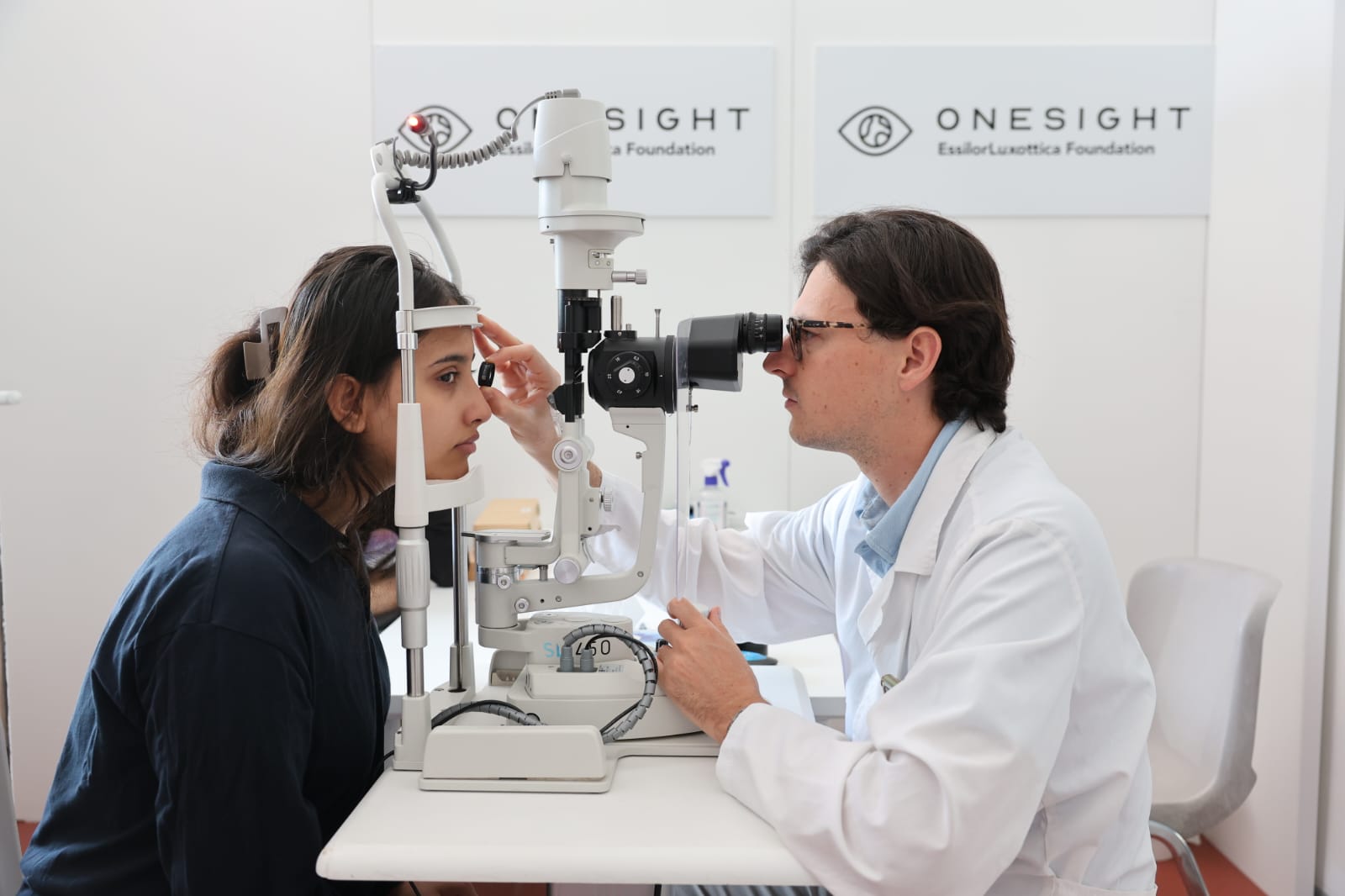
The OneSight EssilorLuxottica Italia Foundation continues its journey through the streets of Rome’s neighborhoods.
In the Casa della Città, in Garbatella – the second stop on the journey after Tor Bella Monaca – the Foundation has set up a free temporary eye clinic for the most vulnerable people. Nearly seven hundred poor, marginalized, or socially and health-disadvantaged people will benefit from it from June 9 to 20.
The initiative is part of the “Sight Days” initiative launched by EssilorLuxottica on the occasion of the Holy Jubilee 2025, and implemented thanks to the doctors of the Ophthalmology Operating Unit of the Policlinico Umberto I. «We are delighted that this initiative actively involves all our young doctors, committed to providing healthcare services to people in fragile conditions – says Leopoldo Spadea, Director of the Ophthalmology U.O.C. –. Eye Clinic at the Policlinico Umberto I in Rome. It is a precious opportunity to concretely promote visual prevention and to strengthen in our younger professionals the sense of social responsibility that must always guide the medical profession».
A unique experience with a strong social value, concretely rooted in the spaces of the city. «As the Department of Heritage, we believe that public spaces must be living places, open to serving the community - explains Tobia Zevi, Councilor for Heritage and Housing Policies of the Municipality of Rome -. It is with this spirit that we have decided to make the Casa della Città, recently renovated, available to the Foundation to host and sponsor this initiative of high social value».
Promoting opportunities to support vulnerable people is of great importance, even more so if done to help recover a precious and indispensable asset such as sight. «Initiatives like this represent a model of public health, because they implement the concept of proximity care: care capable of bringing care closer to the patient, of intercepting needs where they arise and of offering timely, effective and accessible responses to all - says Marcello Gemmato, Undersecretary of State at the Ministry of Health -. As the Ministry of Health, we look favorably on projects such as those promoted by the OneSight EssilorLuxottica Italia Foundation, because they bring together the commitment of institutions, the generosity of volunteers and the expertise of healthcare professionals, to ensure that the right to health is always guaranteed, even to those living in fragile conditions».
And, as always, a thought for Pope Francis. «We would like to ideally dedicate this second clinic of the Jubilee program to Pope Francis, with whom we had the honor of sharing our initiative in January – says Andrea Rendina, Secretary General of the OneSight EssilorLuxottica Italia Foundation –. His words have inspired us to carry it forward with renewed sobriety and a spirit of solidarity».
The Sight Days program is bringing extraordinary and tangible results: over a thousand people have already received a pair of glasses and four hundred have been directed towards clinical tests. «We are deeply happy to contribute to improving the eyesight of so many, because seeing better also means living better»,  concludes Rendina.


Lavinia Sdoga

The Jubilee of Families, Children and the Elderly: Generations on the Move

The Jubilee of Families, Children and the Elderly: Generations on the Move

Grandparents, parents and children will come together side by side for a unique event
: the Jubilee dedicated to families, children and the elderly. From
Friday 30 May to Sunday 1 June, Rome will be transformed into a great
intergenerational embrace, with over 60,000 faithful from every
corner of the world ready to share testimonies, emotions and moments of
prayer.
The city will host initiatives in the squares, thematic meetings and the
traditional mass with the Pope in St. Peter's Square, a special moment of
faith and unity. It will be a celebration of family ties, an invitation to reflect
on the importance of health, affection and solidarity between
generations.

The value of family in health
The family is not only an emotional reference point, but also the first
place where we learn to love and care for ourselves and others. It is
in the family that the values of a healthy lifestyle are transmitted: eat
well, move more, support each other in times of difficulty. Children and parents
can learn together how to prevent illness, while grandparents bring with them
the wisdom of those who have already faced many challenges.

Children: growing up healthy from an early age
Children need exercise, play, outdoor activities, but also loving care and good habits at the table and in daily life. The family is the place where these habits are formed. The Jubilee is an opportunity to remember that the health of the little ones also depends on the time we spend with them, teaching them the importance of balance between body and mind.
The elderly: health as a precious gift
For grandparents and the elderly, health is the key to maintaining independence and quality of life. The family can become the support network that helps them live better, prevent loneliness and motivate them to stay active and engaged. The Jubilee invites us to rediscover the beauty of these bonds and to make mutual care an act of love.

The Jubilee as a bridge between generations
The Jubilee days dedicated to families, children and the elderly remind us that health is a good that is built together, day after day. It is an invitation to walk side by side: children, parents and grandparents, united by the same desire to be well and to love each other.

The key to understanding: health as a family inheritance
Health is not only inherited in the genes, but also in lifestyles, in daily gestures, in everyday choices. The Jubilee reminds us that every family can become a building site of health, a place where children, adults and the elderly learn to love each other and build a healthier future together.

The programme of the weekend
The programme of Saturday 31 May includes in the morning entertainment in the squares of the city, a catechesis on the theme of seniority in the basilica of Santa Maria in Trastevere and the thematic conference ‘The Family Global Compact and the international network of family associations’ at the Lumsa University. From 6.30 p.m. to 8 p.m., Piazza San Giovanni in Laterano will host the ‘Feast of the Family’, with the recitation of the Rosary to close the Marian month. Also on Saturday it will be possible to make a pilgrimage to the Holy Door and receive the Sacrament of Reconciliation in the Jubilee churches.

The Jubilee of Families, Children, Grandparents and the Elderly will conclude on Sunday 1 June with the traditional mass presided over by the pontiff or his delegate. Admission to St. Peter's Square will be totally free and no ticket will be required. 


The polymicrobial infection affecting Pope Francis: what we know

Pope Francis, who has been hospitalized for four days at the Gemelli Hospital in Rome, is facing a complex health situation. Although he spent a peaceful night, recent medical examinations have revealed a polymicrobial respiratory infection, prompting doctors to adjust his treatment.

What Is a Polymicrobial Infection?

A polymicrobial infection occurs when multiple pathogenic microorganisms—such as bacteria, viruses, or fungi—are present simultaneously in the respiratory tract. These microorganisms can interact with each other, increasing their virulence and making diagnosis and treatment more challenging.

Causes and Risk Factors

Polymicrobial respiratory infections often develop in patients with preexisting conditions, such as chronic obstructive pulmonary disease (COPD), or as secondary infections following viral illnesses like influenza and COVID-19, which can make patients more susceptible to bacterial infections. These infections are more common in immunocompromised individuals, including cancer patients, transplant recipients, and people with HIV. Genetic conditions such as cystic fibrosis can also predispose individuals to mixed bacterial infections, involving resistant pathogens like Pseudomonas aeruginosa and Staphylococcus aureus.

Main Symptoms

The symptoms of a polymicrobial respiratory infection vary depending on its severity and the microorganisms involved. Common symptoms include:

  • Persistent or recurrent fever
  • Productive cough with purulent sputum
  • Shortness of breath and fatigue
  • Chest pain
  • Wheezing or lung crackles

Diagnosis

To diagnose a polymicrobial infection, doctors perform microbiological tests such as sputum cultures, nasopharyngeal swabs, and molecular testing (PCR) to identify the pathogens involved. Imaging techniques, including chest X-rays and CT scans, help detect lung lesions or infiltrates. Blood tests, such as blood cultures and inflammatory biomarkers, are also used to assess the spread of the infection and the risk of systemic complications.

Treatment and Management

Treatment depends on the type of microorganisms involved and the severity of the infection. Typically, broad-spectrum antibiotics are initially administered, followed by targeted therapy once specific pathogens have been identified. In more complex cases, combination therapies are used to cover both aerobic and anaerobic bacteria. If the infection also involves viruses or fungi, antiviral or antifungal medications are prescribed. In severe cases, respiratory support may be necessary, along with secretion drainage through bronchoscopy or respiratory physiotherapy. Immunocompromised patients may also receive immunoglobulin therapy or other supportive treatments.

Prognosis and Mortality Rates

The severity of a polymicrobial infection depends on factors such as the patient’s age, underlying health conditions, and access to timely treatment. In hospitalized patients with nosocomial pneumonia, the mortality rate can range from 20% to 50%, especially in cases involving antibiotic-resistant infections. Patients with COPD or other chronic respiratory diseases face an increased risk due to compromised lung function. In immunocompromised individuals, the infection can rapidly progress to sepsis and multi-organ failure, leading to a higher mortality rate.

Pope Francis remains under close medical supervision and is receiving appropriate treatment to combat this complex infection. His condition continues to be monitored, and doctors will evaluate his progress in the coming days.

Ecological Sunday Dedicated to Jubilee Pilgrimage Routes

Ecological Sunday Dedicated to Jubilee Pilgrimage Routes

On the occasion of the Ecological Sunday on January 26, 2025, a series of events will kick off to promote and highlight the religious pilgrimage routes that, during the Jubilee, will be traveled by pilgrims from all over the world.

Walking towards Rome leaves a mark on the soul: an experience that everyone has the chance to try on Sunday, January 26.

Simply register and join the final stage of one of the three routes: Francigena, Francigena nel Sud, and Cammino di Francesco.


Check out our Guide: The Pilgrim's Journey


Important reminders: bring a packed lunch, water, a waterproof jacket and/or poncho, and appropriate shoes.

 
Francigena Route


Meeting point: 9:15 AM at Giardino Massimo Urbani, 100 meters from Monte Mario Station.
Departure: 10:00 AM.
 
Francigena nel Sud
Meeting point:8:30 AM at the Info Point of Santa Maria delle Mole on Via della Repubblica (Marino), Santa Maria delle Mole district.
Or at 9:30 AM on Via di Terricola.
Departure: 9:45 AM.
 
Cammino di Francesco
Meeting point: 8:30 AM at Piazza Sempione.
For all walkers, the meeting point at the end of the journey will be the Auditorium Conciliazione at 3:00 PM.
At 4:00 PM, we will cross the Holy Door together.

 
Francigena Route Details
We will walk along the Via Trionfale and extensive sections of the Monte Mario Park before reaching St. Peter’s Square.

Meeting point: 9:15 AM at Giardino Massimo Urbani, 100 meters from Monte Mario Station.
Departure: Monte Mario Station, Piazza Sante De Sanctis
Arrival: Auditorium Conciliazione, Via della Conciliazione 4
Distance: 10 km
Difficulty: Easy
 
To register, click here.

Jubilee 2025: 116117 Active in Rome for Non-Urgent Care

Jubilee 2025: 116117 Active in Rome for Non-Urgent Care

It won’t be a bigger problem to find one video game lover in your neighbor. Since the introduction of Virtual Game.

Giubileo in Salute è un progetto

Medikea

Con il patrocinio di

Partner
Privacy Policy Cookie Policy